



"Claude earns a 72 out of 100 in our FanalMag rating for Africa. The output quality — writing, coding, document analysis — is the best we have tested from any AI tool, earning our highest-ever Output Quality score of 88/100. Extended Thinking mode produces genuinely impressive reasoning. The clean interface is a pleasure to use. And Anthropic's commitment to honest, safety-first AI means you can trust Claude more than most competitors when accuracy matters. But Claude's Africa accessibility score of 60/100 drags the overall rating down. No affordable mid-tier plan. No local currency billing. No mobile money. No image generation, no video, no voice. Anthropic is building an exceptional product, but it is building it primarily for well-resourced users in developed markets. The African user is not yet the target customer — and it shows. Our recommendation: If you are a professional writer, developer, or researcher in Africa who can afford $20/month and has solved the payment method issue, try Claude Pro for a month. The writing quality and coding capability may convince you it is worth the premium. For everyone else — students, casual users, small business owners on tight budgets — ChatGPT with the Go plan remains the more practical choice for Africa in 2026."
- Best writing quality of any AI tool nuanced, natural, avoids robotic tone
- Extended Thinking mode produces genuinely impressive, deep reasoning
- 200K-1M token context window handles massive documents effortlessly
- Clean, distraction-free interface that is easier to learn than ChatGPT
- Available in 30+ African countries, including Nigeria, Kenya, South Africa, Ghana
- Projects feature organise work brilliantly for professionals
- No affordable plan — jumps straight from Free to $20/month Pro with no middle tier
- No image generation at all — cannot create visuals like ChatGPT or Gemini
- No video generation, no voice mode, no equivalent to Sora or Deep Research
- Payment requires international Visa/Mastercard — no mobile money, no local currency billing
- Free tier message caps are frustratingly tight during peak hours
- Several African countries are still not on the supported list
Claude review for Africa is not just about model quality. It is about whether Anthropic’s chatbot actually works under African conditions, including weaker payment access, slower networks, mobile-first usage, and price sensitivity.
This Claude review for Africa uses the same testing framework we applied in our ChatGPT review: hands-on testing across African networks, real-world prompts relevant to African professionals, and scoring against our six categories, including the Africa Accessibility metric that no other review site offers. After weeks of daily use on both Free and Pro tiers, here is the honest result: Claude scores 73 out of 100.
That score tells a specific story. Claude produces the best writing of any AI tool available today — period. The output quality is a genuine step above ChatGPT for long-form content, nuanced analysis, and code. But Claude’s Africa story is weaker than ChatGPT’s. There is no affordable Go-style plan. There is no image generation. There is no local currency billing. And several African countries remain locked out entirely. If you are a professional writer, developer, or researcher in Lagos, Nairobi, or Johannesburg with a dollar card and $20 to spend monthly, Claude might actually be the better AI for your work. For everyone else, the accessibility gap is real.
What Is Claude AI in 2026?
Claude is built by Anthropic, a San Francisco company founded by former OpenAI researchers who left to build what they call a “safety-first” AI. The philosophy matters because it shows up in the product: Claude is less likely to hallucinate confidently, less likely to produce harmful content, and more likely to say “I’m not sure” when it genuinely does not know something. For African users who rely on AI for professional work where accuracy matters, such as legal drafting, financial analysis, and medical information, this cautious approach has real value.
The current Claude lineup consists of three models in the Claude 4.5 family, plus the newest flagship. Claude Haiku 4.5 is the fast, lightweight model for quick tasks. Claude Sonnet 4.5 is the balanced everyday workhorse, strong at writing, coding, and analysis. Claude Opus 4.5 is the heavyweight for complex reasoning. And Claude Opus 4.6, released in February 2026, is Anthropic’s newest and most capable model, featuring a 1-million-token context window (in beta), a 128K maximum output token limit, and adaptive thinking that adjusts reasoning depth to the complexity of your question.
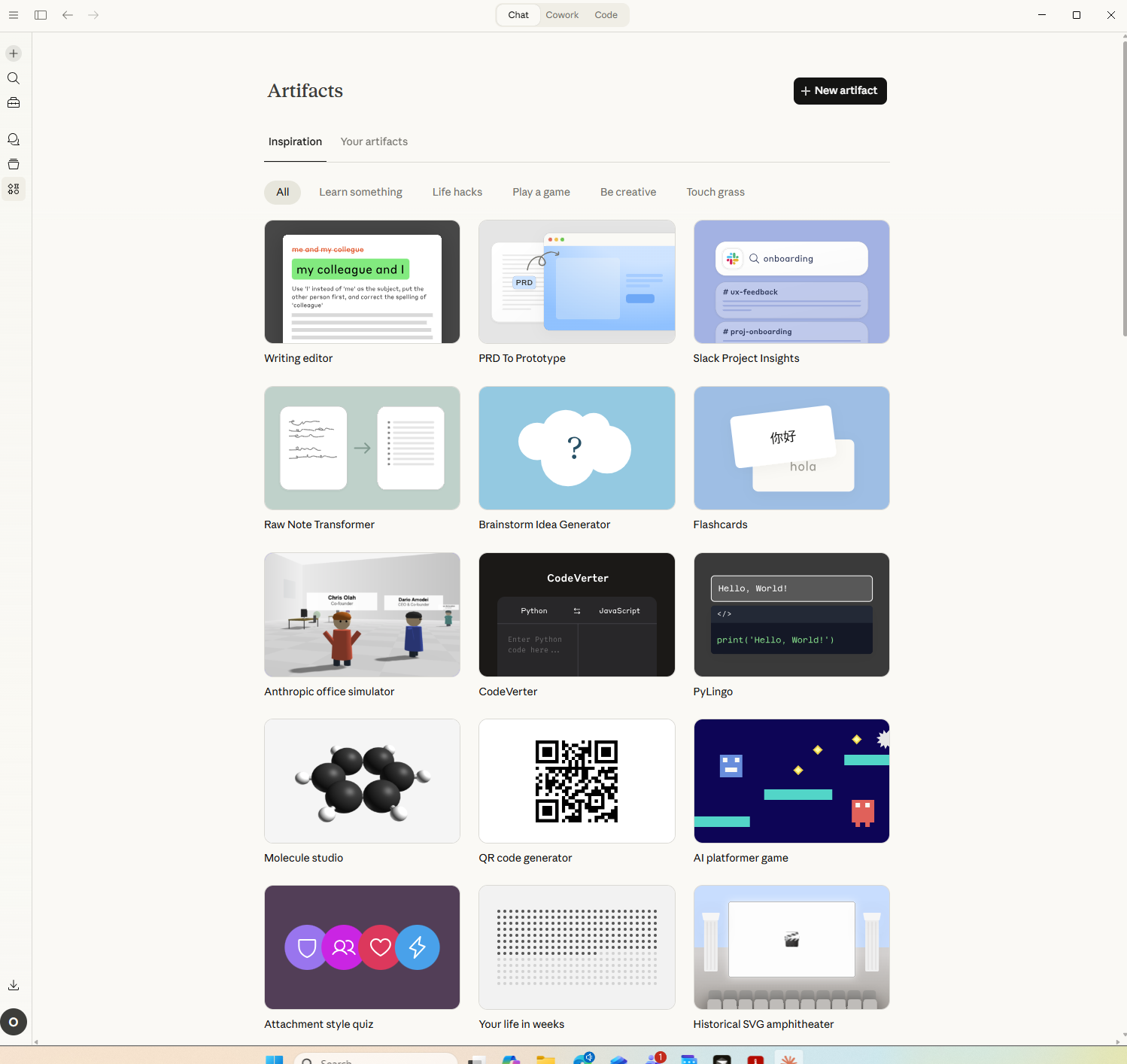
What Claude does exceptionally well: writing (arguably the best in the industry), coding (top scores on developer benchmarks), document analysis (that massive context window means you can upload entire books), and structured reasoning through Extended Thinking mode. What Claude does not do: generate images, create videos, generate voice responses, or search the web in real-time, the way ChatGPT’s Deep Research does. Claude also lacks an equivalent to ChatGPT’s Canvas, Sora, or Agent Mode ecosystem — it is a more focused tool.
Claude Plans and Pricing for Africa
This is where Claude’s Africa story diverges sharply from ChatGPT’s. OpenAI launched a ₦7,000/month Go plan across all 54 African countries. Anthropic has done nothing comparable.
The Plans
What makes this Claude review for Africa different is that we measure not just model quality, but whether the product is actually usable and affordable under African conditions.
| Plan | Price | Nigeria Equivalent: What | What You Get |
|---|---|---|---|
| Free | $0 | ₦0 | Claude Sonnet 4.5 with tight message caps (~20 msgs/day). Basic web search, image analysis, and artefacts. No Projects, no Extended Thinking. |
| Pro | $20/mo ($17 annual) | ~₦32,000 | 5x Free usage. All models, including Opus 4.6. Extended Thinking, Projects, Claude Code, Google Workspace integration, Research tools, and MCP connectors. |
| Max 5x | $100/mo | ~₦160,000 | 5x Pro usage (25x Free). Priority access, persistent memory, and early features. Same models as Pro. |
| Max 20x | $200/mo | ~₦320,000 | 20x Pro usage (100x Free). Zero-latency priority, maximum throughput. Same features as Max 5x. |
The Missing Middle
Notice what is absent: there is no $5 or ₦7,000 tier. Claude jumps from Free (with tight limits that a serious user will exhaust in under two hours) directly to $20/month. For a student in Accra or a freelancer in Dar es Salaam, that $20 represents a fundamentally different financial commitment than it does for a developer in San Francisco. ChatGPT solved this with the Go plan. Google solved it with Gemini’s $7.99 plan. Anthropic has not addressed it.
Payment: The Same Problem, Made Worse
Like ChatGPT, Claude accepts only Visa and Mastercard. No M-Pesa, no mobile money, no bank transfers. But unlike ChatGPT, Claude has not introduced local currency billing in any African country. Every payment is processed in USD, which means your bank’s foreign transaction fees apply on top of the subscription cost. For Nigerian users, that can add 1.5-3% in fees. For Kenyan users with KES-denominated cards, the exchange rate markup can be even steeper.
If you are determined to subscribe, you will need a virtual dollar card from Chipper Cash, Grey, or a similar service — the same workaround required for ChatGPT Plus, but without the option of a cheaper local-currency tier.
Country Availability
Claude is available in over 150 countries, and the African coverage is decent but not universal. We confirmed access from Nigeria, Kenya, South Africa, Ghana, Egypt, Morocco, Tanzania, Uganda, Rwanda, Senegal, and about 30 other African nations. However, some countries remain excluded. If you are in an unsupported country, you will see a “not available in your region” message at signup — and unlike ChatGPT, there is no alternative tier designed for emerging markets.
Hands-On: Testing Claude in African Conditions
Writing Quality — Where Claude Genuinely Excels
We gave Claude and ChatGPT the same prompt: “Write a 1,000-word op-ed arguing that African governments should regulate AI development rather than importing Western frameworks wholesale.” The difference was striking.
ChatGPT produced a competent, well-structured piece with clear arguments and good examples. It read like a solid B+ university essay. Claude produced something that read as if it could appear in a quality newspaper. The prose was more varied in rhythm. The arguments were more nuanced, acknowledging counterpoints without undermining the thesis. It referenced specific African policy initiatives (the AU’s Continental AI Strategy, Rwanda’s AI policy, Nigeria’s National AI Strategy) with more accuracy and context than ChatGPT managed. Most tellingly, Claude’s piece did not have that slightly generic, “written by AI” quality that even good ChatGPT output sometimes carries.
This pattern repeated across every writing test we ran. Business proposals, formal letters, creative content, and technical documentation — Claude consistently produced output that required less editing and sounded more natural. If your work involves producing written content, this difference alone may justify the $20/month subscription.
Coding and Technical Work
Claude has earned a reputation among developers as the strongest coding AI available, and our testing confirmed it. We asked both Claude and ChatGPT to debug a Python Flask API with a subtle authentication race condition. Claude identified the exact issue in its first response and provided a fix with a clear explanation. ChatGPT required two follow-up prompts to narrow down the problem.
For web development, data analysis scripts, and system administration tasks, the kind of work that African developers, freelancers on Upwork, and tech startup teams do daily, Claude is exceptionally capable. The Extended Thinking mode on Pro is particularly valuable for complex debugging because you can watch Claude’s reasoning process and see where it considers and rejects different hypotheses.
Claude Code, available to Pro subscribers, lets you use Claude directly in your terminal for agentic coding tasks. For developers building products, whether fintech apps in Lagos or agritech platforms in Nairobi, this is a significant productivity tool.
Document Analysis and Research
This is where Claude’s massive context window becomes a genuine competitive advantage. Claude Opus 4.6 supports up to 1 million tokens in its context window (in beta). In practical terms, that means you can upload an entire 300-page legal contract, a full technical specification document, or a complete academic thesis, and Claude can analyse the entire thing without losing track of details from page 5 when answering questions about page 250.
We tested this with a 150-page African Development Bank report on infrastructure investment. Claude accurately summarised key findings, identified inconsistencies between sections, and answered specific questions about buried data points that required cross-referencing multiple chapters. ChatGPT’s smaller context window meant it could process only portions of the document at a time, requiring multiple uploads and disrupting continuity between sessions.
For lawyers reviewing contracts, researchers analysing policy documents, or consultants processing large reports, this capability is genuinely superior to anything else on the market.
African-Specific Knowledge
Claude’s factual knowledge about Africa is comparable to ChatGPT’s, with similar strengths and weaknesses. It correctly handles questions about major African economies, political structures, and cultural contexts. It knows the EAC, ECOWAS, and AU institutional frameworks. It understands the significance of Mpesa and can discuss the trade implications of AfCFTA.
Where Claude slightly edges ahead, it is less likely to state incorrect information confidently. When asked about a specific Nigerian state policy, Claude said: “I’m not confident about the current status of this policy. I’d recommend checking the most recent state gazette for accurate information.” In the same scenario, ChatGPT provided an answer that sounded authoritative but was actually outdated. For professional contexts where accuracy matters, Claude’s honesty about its limitations is valuable.
Claude on African Networks
3G Performance
Claude’s web interface loaded more slowly than ChatGPT’s on 3G connections — initial load took 10-15 seconds compared to ChatGPT’s 8-12 seconds. Once loaded, text streaming was similarly delayed. The interface is clean and lightweight, which helps, but it is a web-first product without the same level of mobile optimisation that ChatGPT has invested in.
4G and Wi-Fi
Claude performs well on 4G and Wi-Fi. Response times are fast, Extended Thinking mode takes 10-30 seconds for complex queries (which is expected — it is doing deeper processing), and the interface remains responsive throughout long sessions.
Mobile Experience
Claude has iOS and Android apps that work well on mobile. However, the app lacks voice input (unlike ChatGPT’s Advanced Voice Mode) and feels more like a mobile website wrapper than a purpose-built mobile experience. For African users who primarily access the internet via smartphones — the majority — this is a noticeable gap.
Data Usage
Claude uses approximately 4-7 MB per 30-minute text session — slightly less than ChatGPT because there is no image generation loading. For document analysis, uploading a large PDF can use 10-30 MB, depending on file size. Overall data consumption is modest and manageable on capped plans.
African Language Support
We ran Claude through the same language tests as ChatGPT.
Swahili
Good performance, comparable to ChatGPT. Claude understood Swahili prompts, responded grammatically, and handled code-switching between Swahili and English. Slightly less fluent than ChatGPT in casual Swahili conversation, but more accurate in formal or technical Swahili responses.
Yoruba
Weaker than ChatGPT. Claude’s Yoruba output had more grammatical errors and occasionally fell back to English mid-sentence when it could not find the right Yoruba expression. Tonal marks were inconsistent. Usable for basic translation, not reliable for content creation.
Hausa
Similar to Yoruba, functional for simple tasks, unreliable for anything requiring precision. Claude acknowledged its limitations more openly (“My Hausa may contain errors, please have a native speaker review this”), which is helpful but also confirms the gap.
Amharic
Weaker performance than ChatGPT. Claude struggled more with Ge’ez script input and sometimes produced responses mixing Amharic with other Semitic language fragments. Not recommended for Amharic work without extensive human review.
Nigerian Pidgin
Surprisingly decent, roughly on par with ChatGPT. Claude captured the informal register and common expressions. Useful for understanding Pidgin content, less reliable for generating it authentically.
Overall Assessment
Claude’s African-language support lags behind ChatGPT’s, particularly for Yoruba and Amharic. This likely reflects differences in training data. For English-language work (including African varieties of English), Claude is excellent. For African languages, both tools remain works in progress, with ChatGPT slightly ahead.
What Claude Cannot Do (That ChatGPT Can)
This section matters for African users evaluating which tool to invest in.
No image generation. Claude cannot create images at all. If you need AI-generated visuals for social media, marketing, or presentations, you need ChatGPT, Midjourney, or another tool. This is a significant gap for content creators and small business owners.
No video generation. No equivalent to ChatGPT’s Sora integration. Claude is text and code only.
No voice mode. ChatGPT offers Advanced Voice Mode for natural spoken conversations. Claude has no voice interface beyond what your phone’s dictation provides.
No Deep Research equivalent. ChatGPT’s Deep Research browses the web, reads dozens of pages, and produces structured research reports. Claude has basic web search, but nothing approaching the autonomous research capability that makes ChatGPT Plus worth $20 for researchers.
No affordable tier. ChatGPT Go at ₦7,000 fills a crucial gap. Claude has nothing between Free and $20/month Pro.
These gaps mean Claude is a specialist tool — exceptional at what it does, but narrower in scope than ChatGPT’s all-in-one ecosystem.
Who Should Use Claude in Africa?
Professional Writers and Content Creators
If writing quality is your top priority — if you produce reports, articles, proposals, or marketing copy and need output that sounds human rather than AI-generated — Claude is the best tool available. The difference in prose quality between Claude and ChatGPT is noticeable and consistent. For writers willing to pay $20/month and who have a dollar card, Claude delivers genuine value.
Developers and Engineers
Claude is arguably the strongest coding AI in 2026, and Claude Code (Pro tier) adds agentic terminal capabilities. African developers building products, contributing to open source, or freelancing on global platforms will find Claude an excellent programming partner. The Extended Thinking mode for debugging complex issues is particularly strong.
Researchers and Analysts
The massive context window makes Claude ideal for anyone who works with large documents — lawyers, policy analysts, academic researchers, consultants. Being able to upload and query an entire report in one conversation is transformative. However, if you also need web research capabilities, ChatGPT’s Deep Research is superior.
Students
This is where we hesitate to recommend Claude for African users. The free tier is too limited for regular academic use, and $20/month is steep for most African students. ChatGPT’s Go plan at ₦7,000 is a far more practical choice for students. Only recommend Claude to students who specifically need superior writing assistance or coding help and can afford Pro.
Claude Review for Africa: Score Breakdown
Features and Capability — 75/100: Claude excels at writing, coding, and document analysis. Extended Thinking and Projects are excellent. But the absence of image generation, video, voice, and a Deep Research equivalent leaves significant gaps compared to ChatGPT’s ecosystem. You are paying for fewer features.
Ease of Use — 82/100: Claude’s interface is cleaner and less overwhelming than ChatGPT’s. The conversation experience feels more natural. Projects organise work intuitively. It scores higher here because simplicity is a feature, but the lack of a mobile-optimised voice interface hurts on a continent where smartphones are the primary device.
Africa Accessibility — 60/100: This is Claude’s weakest area relative to ChatGPT. No affordable tier for emerging markets. No local currency billing anywhere in Africa. No mobile money support. Several African countries are still excluded—there is no equivalent to OpenAI’s explicit Africa expansion strategy. Anthropic has not demonstrated the same commitment to the African market that OpenAI has with ChatGPT Go.
Value for Money — 62/100: At $20/month, Claude Pro is the same price as ChatGPT Plus but offers fewer features (no images, no video, no Deep Research, no voice). The value proposition only makes sense if you specifically need Claude’s superior writing quality, coding ability, or document analysis. For general-purpose AI use, ChatGPT offers more for the same money.
Reliability and Speed — 72/100: Claude performs well on stable connections. Extended Thinking mode is slower by design but delivers better reasoning. The free tier hits rate limits frustratingly quickly during peak hours. The web interface loads slightly more slowly than ChatGPT on 3G. The mobile app is functional but not best-in-class.
Output Quality — 88/100: This is Claude’s crown jewel and the highest output quality score we have given any AI tool. The writing is genuinely a tier above competitors. Code quality is excellent. Document analysis with the large context window is industry-leading. The honesty about uncertainty (saying “I’m not sure” rather than confidently hallucinating) adds professional reliability. If output quality is your primary criterion, Claude wins.
Claude vs ChatGPT for African Users
| Category | Claude | ChatGPT | Winner for Africa |
|---|---|---|---|
| Writing Quality | Exceptional | Very Good | Claude |
| Coding | Excellent | Very Good | Claude |
| Image Generation | None | Built-in | ChatGPT |
| Research Ability | Basic web search | Deep Research | ChatGPT |
| Affordable Plan | None (Free or $20) | Go at ₦7,000 | ChatGPT |
| Document Analysis | 1M token context | 128K-196K context | Claude |
| African Languages | Decent (Swahili good) | Slightly better range</td |
p> The scorecard is clear: ChatGPT wins on breadth, accessibility, and Africa-specific investment. Claude wins on output quality, coding, document analysis, and honesty. Your choice depends on what matters most to your work.
Frequently Asked Questions: Claude AI in Africa
Is Claude AI available in Nigeria?
Yes. Nigeria is on Anthropic’s list of supported countries. You can access Claude for free at claude.ai or through the mobile apps. However, subscribing to Pro requires a Visa or Mastercard that works for international USD transactions.
Is Claude available in Kenya and South Africa?
Yes, both Kenya and South Africa are supported. There is no local currency billing — all charges are in USD. South African users do not receive rand billing from ChatGPT.
Can I pay for Claude Pro with M-Pesa or mobile money?
No. Anthropic only accepts Visa and Mastercard. Mobile money services, including M-Pesa, MTN Mobile Money, and Airtel Money, are not supported. You will need a virtual dollar card from services like Chipper Cash or Grey to subscribe.
Is Claude better than ChatGPT for writing?
Yes, in our testing, Claude consistently produces higher-quality writing — more natural prose, better argument structure, less robotic phrasing. If writing quality is your primary need, Claude is the superior choice. However, ChatGPT offers more features overall (images, video, voice, and Deep Research).
Does Claude have a cheap plan like ChatGPT Go?
No. Claude goes from Free (with tight message limits) directly to $20/month Pro. There is no equivalent to ChatGPT’s ₦7,000 Go plan. This is Claude’s biggest accessibility gap for African users.
Can Claude generate images?
No. Claude cannot generate images at all. It can analyse and describe images you upload, but it cannot create new ones. If you need AI image generation, use ChatGPT, Midjourney, or another tool.
Does Claude work on slow internet in Africa?
It works on 3G but loads slightly slower than ChatGPT (10-15 seconds initial load). On 4G and Wi-Fi, performance is good. Data usage is modest at 4-7 MB per 30-minute text session. The mobile app handles connectivity drops reasonably well.
Is Claude Pro worth $20/month for African users?
Only if your work specifically benefits from Claude’s strengths: superior writing, advanced coding, or large document analysis. At ₦32,000/month, it is a significant expense. For general-purpose AI use, ChatGPT’s Go plan at ₦7,000 offers far better value. For professional writers and developers who can see a direct return on the investment, Claude Pro is worth it.
The Final Verdict
Claude earns a 73 out of 100 in our FanalMag rating for Africa. The output quality for writing, coding, and document analysis is the best we have tested from any AI tool, earning our highest-ever Output Quality score of 88/100.
Extended Thinking mode produces genuinely impressive reasoning. The clean interface is a pleasure to use. And Anthropic’s commitment to honest, safety-first AI means you can trust Claude more than most competitors when accuracy matters.
But Claude’s Africa accessibility score of 60/100 drags the overall rating down. No affordable mid-tier plan. No local currency billing. No mobile money. No image generation, no video, no voice. Anthropic is building an exceptional product, but primarily for well-resourced users in developed markets. The African user is not yet the target customer — and it shows.
Our recommendation: If you are a professional writer, developer, or researcher in Africa who can afford $20/month and has solved the payment method issue, try Claude Pro for a month. The writing quality and coding capability may convince you that it is worth the premium. For everyone else, casual users, small business owners on tight budgets, ChatGPT with the Go plan remains the more practical choice for Africa in 2026.
In short, this Claude review for Africa finds that Anthropic has built an excellent product, but not yet an Africa-friendly one.
This Claude AI review for Africa was last updated in March 2026. We will refresh this review when Anthropic makes significant changes to pricing, features, or market availability. Read our ChatGPT Review for Africa for a direct comparison. Have feedback? Drop us a comment below.